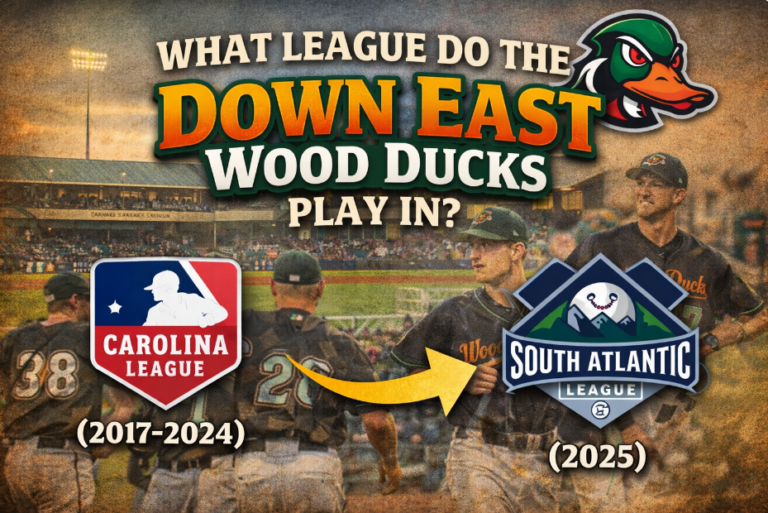
History of the Down East Wood Ducks: How Kinston Got Baseball Back
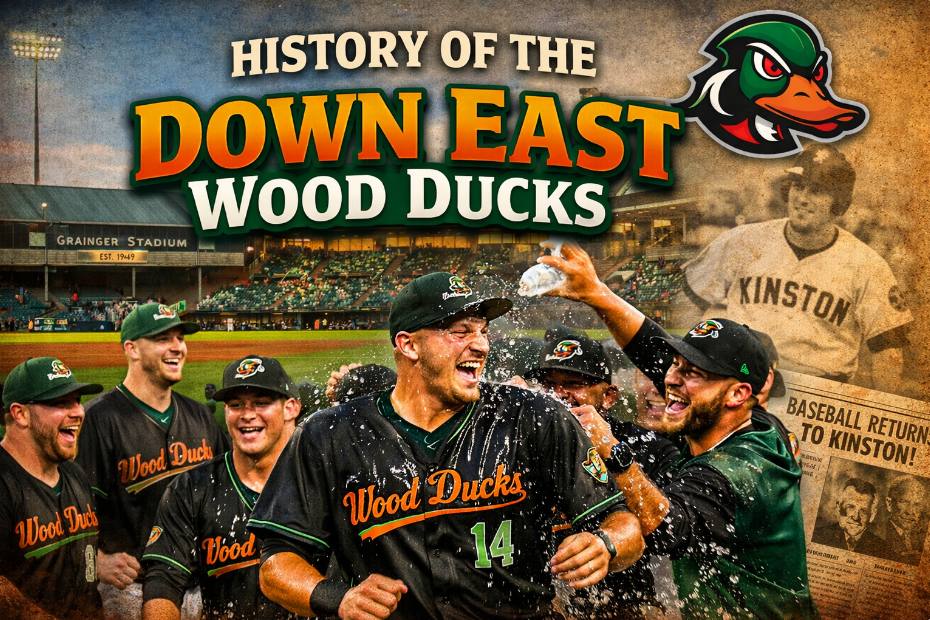
If you’re looking for a Minor League Baseball story that’s equal parts community, tradition, and modern MiLB branding, the Down East Wood Ducks are a perfect case study. For a small city like Kinston, North Carolina, affiliated baseball has never been “just a summer activity.” It’s been a major piece of local identity—tied to a historic ballpark, generations of fans, and decades of player development.
The Wood Ducks officially began play in 2017 as a Minor League Baseball team based in Kinston and affiliated with the Texas Rangers. They played home games at Grainger Stadium, a venue that opened in 1949 and is among the older ballparks in the minors.
But their history isn’t only about what started in 2017. It’s also about what came before them, why Kinston briefly lost affiliated baseball, and how the city worked to bring it back.
Kinston’s Baseball Roots: Why This City Was Ready for a New Team
Long before the “Wood Ducks” name existed, Kinston had a long-running relationship with professional baseball. The city’s ballpark (now known as Grainger Stadium) has hosted pro teams since it opened in 1949, and Kinston spent decades as a Carolina League baseball town.
That history matters because it explains why the Wood Ducks weren’t starting from scratch. They were stepping into an already-established baseball culture—one that cared about:
- summer nights at the stadium
- farm systems and prospects
- local traditions and team identity
According to MiLB’s coverage around the team’s launch, Kinston’s professional baseball history stretches back decades, and Grainger Stadium hosted Carolina League teams for much of the period between the early 1960s and 2011.
The Gap Years: When Kinston Lost Affiliated Baseball
Kinston’s most recent affiliated team before the Wood Ducks was the Kinston Indians, who played in the Carolina League and were affiliated with the Cleveland organization for many years. (The Indians played in Kinston through the 2011 season.)
After the 2011 season, affiliated baseball left town. That created a real concern: when a small-market city loses its MiLB club, it’s not just fewer games—it can mean:
- less foot traffic downtown
- fewer seasonal jobs
- reduced stadium investment
- a big hit to community routine and identity
This is where Kinston’s story becomes a classic “small city fights for baseball” narrative. A long-form report later described Kinston’s push to keep the stadium active and recruit a new club after affiliated baseball left.
How the Wood Ducks Were Born: The Rangers, the Stadium Deal, and 2017 Baseball
The path back to affiliated baseball wasn’t instant. It required a mix of timing, league movement, and MLB-affiliate strategy.
The Texas Rangers commit to Kinston
In August 2016, plans became official: the Texas Rangers announced they were placing a new Advanced-A affiliate in Kinston starting in 2017.
MiLB’s announcement explained that the Wood Ducks would join the Carolina League beginning in 2017 and would play at Grainger Stadium, which already had a reputation as a historic minor league venue.
This mattered because the Rangers weren’t simply “assigning” a team. They were bringing affiliated baseball back to a market with a proven fan culture and a ballpark that could support it.
The Name “Down East Wood Ducks”: Branding, Finalists, and Community Reaction
One of the most memorable parts of the Wood Ducks’ early history is the identity itself.
Why “Down East”?
The team name uses “Down East,” a regional nickname in North Carolina that sparked debate. Early on, some locals questioned whether Kinston fit the “Down East” label.
The naming contest and finalists
According to the team history summarized by widely cited records, a fan naming contest produced finalists including options like:
- Down East Eagles
- Down East HamHawks
- Down East Hogzillas
- Down East Shaggers
- Down East Wood Ducks
Eventually, the organization chose Down East Wood Ducks—named after the wood duck, a colorful waterfowl found in the region.
Why the name stuck
Even if the name initially surprised some people, it became a branding win in the minor league world. In 2017, Ballpark Digest recognized the Wood Ducks for having top-tier logo/branding that season.
And that’s an important lesson for your sports magazine strategy: MiLB branding stories are content gold. They’re local, searchable, and usually under-covered.
Grainger Stadium: The Historic Home of the Wood Ducks
You can’t tell the Wood Ducks’ story without talking about their ballpark.
Grainger Stadium opened on April 21, 1949, and the facility has served as home to multiple eras of pro baseball in Kinston.
MLB.com’s ballpark feature notes Grainger Stadium’s place among the older MiLB venues and highlights its role as the Wood Ducks’ home in Kinston.
That history gave the franchise an immediate “classic baseball” identity:
- old-school stadium feel
- deep community roots
- a setting that looks and feels like baseball tradition
For storytelling, that’s huge. A lot of minor league teams play in newer parks. The Wood Ducks played in a stadium with real history.
The Inaugural Season: 2017 and an Immediate Championship Moment
The Wood Ducks didn’t take long to make noise.
In their first season (2017), the team won a Carolina League championship—a title that became unusual due to weather disruptions. The record notes they were named co-champions after playoff scheduling was affected by Hurricane Irma.
Even if someone is new to baseball, this is an easy narrative hook:
- brand-new team
- instant success
- “storybook first year” feeling
It’s also a strong SEO angle because people search for “Down East Wood Ducks championship” and “Wood Ducks first season.”
Keeping Kinston’s Baseball Past Alive: Throwbacks and Identity
The Wood Ducks leaned into Kinston’s baseball heritage.
For example, in 2018 the team wore Kinston Indians throwback uniforms on select nights to honor the stadium’s long baseball history.
This is exactly the kind of “mini team” storytelling that big sports sites don’t cover deeply:
- throwback nights
- local fan traditions
- community connection
For your magazine, these topics are perfect because you can write:
- more detail than any national outlet
- more local context than Wikipedia
- evergreen content that stays relevant all year
League Changes: MiLB Restructuring and the Wood Ducks’ Classification
Minor league baseball changed dramatically in 2021.
MLB reorganized the minor leagues beginning with the 2021 season, changing league structures, classifications, and affiliations across the country.
What happened to the Wood Ducks?
- The Wood Ducks moved into the newly created Low-A East in 2021 as part of the restructure.
- Later, the league naming shifted again: the “Low-A East” name was replaced, and the team competed again under the Carolina League name.
In plain English: the Wood Ducks stayed in Kinston and stayed affiliated with the Rangers, but the league/classification labels around them changed as MLB standardized the development system.
The 2021 Professional Development License: A Big Commitment (At the Time)
In February 2021, MiLB reported that the Wood Ducks officially accepted their invitation to remain a Rangers affiliate under a 10-year Professional Development License (PDL) agreement, intended to keep Rangers Low-A baseball in Kinston through the 2030 season.
That announcement is important historically because it shows:
- Kinston appeared secure as an affiliated market
- the relationship with the Rangers had long-term intent
- the franchise looked stable after restructuring
What Happened Next: Sale, Relocation Plans, and the End of the Kinston Era
Even with strong local history and a long affiliate relationship, the Wood Ducks’ story in Kinston eventually came to an end.
Sale to Diamond Baseball Holdings
In 2023, it was reported that the Texas Rangers sold the Wood Ducks to Diamond Baseball Holdings, a company that owns and operates multiple MiLB teams.
The move to Spartanburg
The team ultimately relocated after the 2024 season, moving to Spartanburg, South Carolina for 2025 and rebranding as the Hub City Spartanburgers.
From a “history of the Wood Ducks” perspective, this is the closing chapter:
- 2017–2024 = the Wood Ducks era in Kinston
- Kinston still has baseball ties through its stadium history, but the Wood Ducks identity moved on.
Why the Wood Ducks Still Matter (Even After Leaving)
Even though the franchise relocated, the Wood Ducks remain a great example of why minor league baseball is such a strong niche for content creators:
1) They were a community comeback story
Kinston lost affiliated baseball, worked to revive the stadium and attract a new club, then welcomed a fresh identity that immediately won.
2) They show how MiLB branding becomes culture
The name, logo, and identity became a talking point nationally in minor league circles.
3) They’re proof that “small market” doesn’t mean “small story”
This is exactly the kind of team where deep, well-structured articles can rank because so few people write them properly.
FAQs: Down East Wood Ducks History
When were the Down East Wood Ducks founded?
They began play in 2017 as a Minor League Baseball franchise based in Kinston, North Carolina.
Who were the Down East Wood Ducks affiliated with?
They were affiliated with the Texas Rangers throughout their Kinston era (2017–2024).
Where did the Wood Ducks play their home games?
They played at Grainger Stadium in Kinston, which opened in 1949.
Did the Wood Ducks ever win a championship?
Yes— they won a Carolina League title in 2017 (noted as a co-championship due to playoff disruption).
What happened to the Wood Ducks after 2024?
The franchise relocated after the 2024 season to Spartanburg, South Carolina and became the Hub City Spartanburgers.
Final Thoughts
The Down East Wood Ducks were more than a quirky MiLB team name—they were the symbol of Kinston getting affiliated baseball back, playing in a historic stadium, and proving that small markets can still deliver big baseball stories. From their 2017 debut and instant championship moment to the shifts of MiLB reorganization and eventual relocation, the Wood Ducks era is a compact but memorable chapter in the long baseball history of eastern North Carolina.